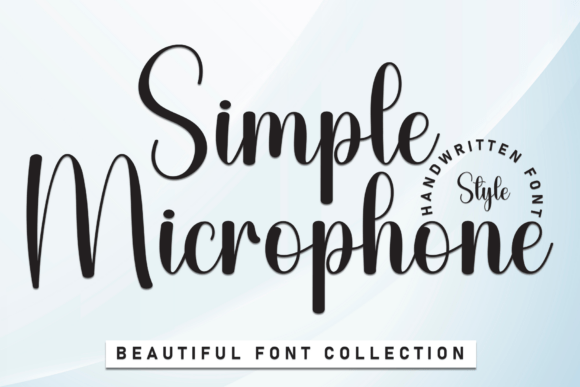
Simple Microphone: The Handwritten Font with a Warm Welcome
There’s a specific kind of charm that comes from text that feels genuinely personal. It’s the warmth of a handwritten note, the friendly scrawl on a chalkboard menu, the inviting script on a gift tag. In a world saturated with crisp, digital precision, this human touch stands out. That’s the exact feeling captured and refined in Simple Microphone, a handwritten font designed to inject a dose of authentic whimsy into any project. It’s not just a typeface; it’s a personality on the page, ready to turn the ordinary into something captivating.
More Than Just a Pretty Script
At first glance, Simple Microphone presents itself as a charming display font. Its letters dance with a gentle, organic flow, mimicking the natural variation of a pen held by a human hand. But look closer, and you’ll notice its careful construction. The strokes have a consistent, friendly weight, and the connections between characters are smooth and legible. This balance is crucial—it’s what makes it a premium font rather than a chaotic scrawl. The overall aesthetic is one of sweetness and approachability, with a slight bounce that gives it an upbeat, fun energy. It avoids the overly formal or the childish, landing in a sweet spot that feels both stylish and sincere.
This particular creative font carries an air of warmth that’s difficult to engineer. It feels like a font you’d trust. This inherent trust factor is a powerful tool for anyone building a brand identity or crafting a message. Whether you’re a blogger wanting to connect more personally with readers or a small business owner designing a product label, the font you choose sends an immediate, subliminal message. Simple Microphone communicates friendliness, creativity, and a touch of playful elegance.
Finding the Perfect Home for Your Handwritten Font
The true strength of a display font like this is its versatility across different media. Its primary calling card is in projects where a personal, human element is key. Think of wedding invitations, where it can set a romantic and joyful tone. Or greeting cards, where its warmth can make any sentiment feel more heartfelt. For packaging design, especially for artisanal goods, cosmetics, or boutique foods, it adds a layer of handcrafted quality that builds immediate appeal.
But its applications extend far beyond stationery and boxes. Consider these practical uses:
- Digital & Web Design: Use it for hero section headlines, pull quotes, or call-to-action buttons on a lifestyle blog or a creative agency’s site. It breaks the monotony of a standard sans serif font and draws the eye.
- Social Media Graphics: In the fast-scroll world of Instagram or Pinterest, a unique font stops the thumb. Simple Microphone is perfect for creating engaging quote graphics, story titles, or promotional announcements that feel personal and shareable.
- Editorial & Publishing: For magazine feature titles, chapter headings in a book, or a newsletter’s masthead, it adds a distinct personality without sacrificing clarity at larger sizes.
- Logo Design & Branding: For businesses that want to project approachability and creativity—like a bakery, a flower shop, a coaching service, or a craft studio—this font can become the cornerstone of a memorable logo. Pair it with a simple, clean serif font or sans serif font for body text to create a professional and balanced visual hierarchy.
- Personal Projects: From DIY party decorations to custom planners and scrapbooking, it elevates hobbyist creations with a professional, polished touch.
Working with Simple Microphone: A Practical Guide
Choosing a font is only half the battle; using it effectively is what brings a design to life. When integrating Simple Microphone into your workflow, a few practical considerations will ensure success.
First, evaluate the project fit. Is the tone of your content friendly, creative, or celebratory? This font excels in those areas. It may not be the best choice for a legal document or a technical manual, but for a brand focused on community, creativity, or joy, it’s a powerful asset. Always consider your audience; its charm is universally appealing but feels most at home in contexts that value personal connection.
Next, master the art of font pairing. A handwritten font is a star player, but it needs a supporting cast. For body copy or lengthy text, pair it with a highly legible, neutral serif font like Lora or a clean sans serif font like Open Sans. This contrast ensures readability while letting the headline font shine. Avoid pairing it with another ornate or script-style font, as this creates visual competition and chaos. The goal is harmony, not a shouting match.
Don’t forget to review the included styles and characters. A quality commercial font often comes with more than just basic letters. Look for ligatures (special connected letter pairs), stylistic alternates (different versions of the same character), and a full set of punctuation and numerals. These extras allow for more natural, customized typography, helping you avoid repetitive letter shapes that can make a handwritten font look mechanical.
Finally, mind the readability. While designed for clarity at display sizes, test it at the scale you intend to use. For very small text, like in a lengthy paragraph, even the best handwritten fonts can become taxing to read. Its strength is in headlines, short phrases, and prominent text where its personality can be fully appreciated without hindering comprehension. For web design, also consider how it renders on different screens and ensure it’s embedded properly for fast loading.
Incorporating a handwritten font like Simple Microphone into your design assets is about more than just following a trend. It’s a strategic choice to build warmth, recognition, and engagement. It’s about giving your digital presence a heartbeat and your printed materials a handshake. When used thoughtfully, it doesn’t just display text—it communicates feeling, turning every message into an invitation that’s hard to ignore.